Cottbus · Lusatia · Germany
Paint.
Symbols.
No Illusio.
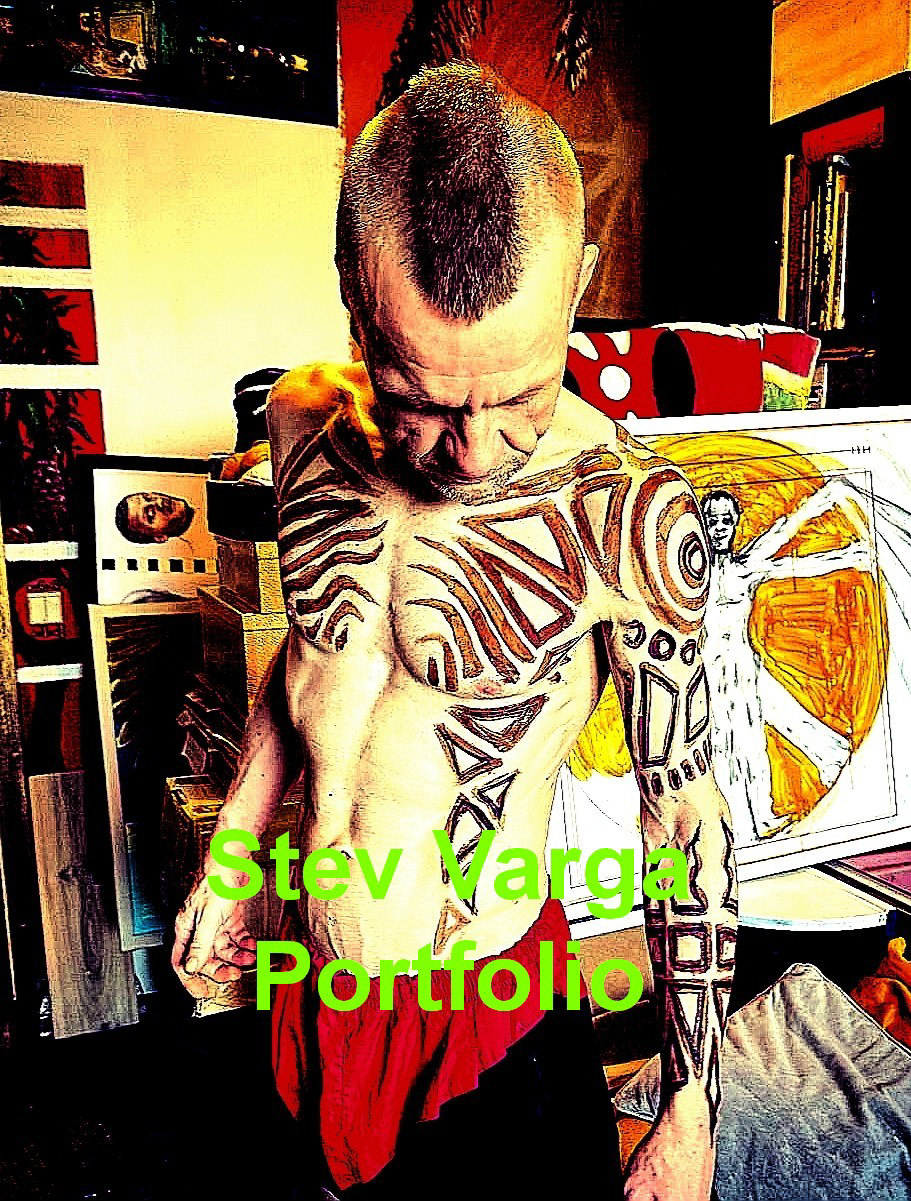
Stev Varga is a self-taught painter, comic maker and trained bookbinder working out of Cottbus — a post-socialist, multicultural city he loves, needles and repaints. His mixed-media works in acrylic, coffee, cotton and found wood critique and reimagine social norms.
“Art is action.” — Stev Varga
Seven bodies of work
Varga sorts his archive into series the way a bookbinder sorts signatures — each with its own spine. Every count below is a work photographed for Catalogue 01.
Xenoase
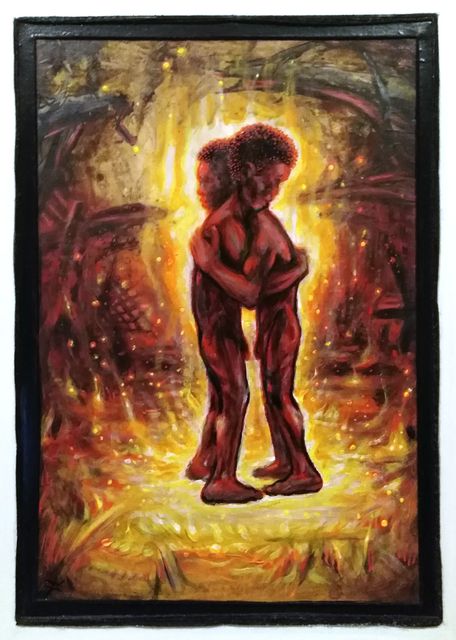
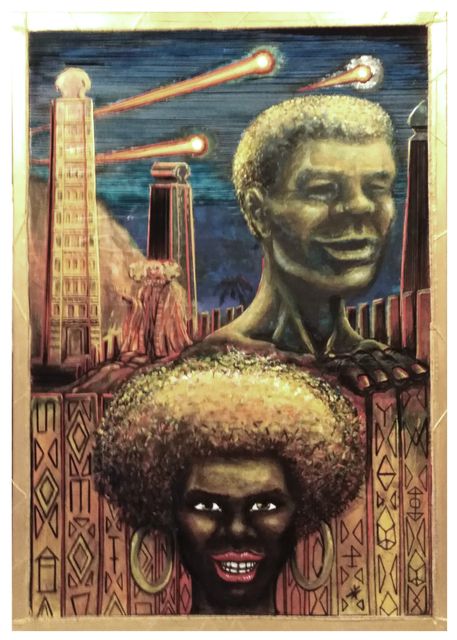
The heart of the archive — figures, flags and pictographic borders honouring African lives and the African diaspora in Lusatia.
Open series → 6Abstract
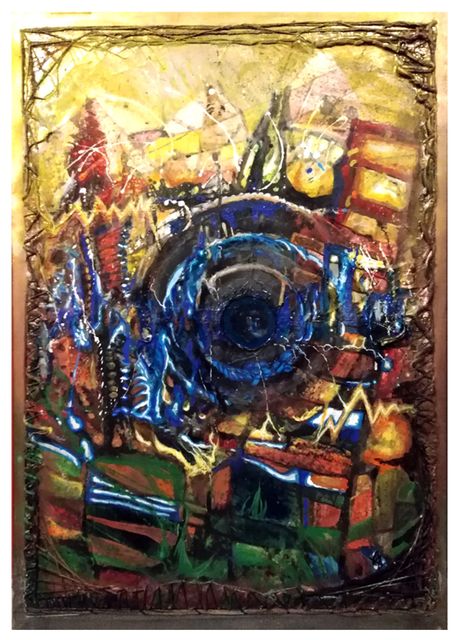
Layered mixed-media reliefs of canvas, carton, metal, glass and coffee, built up over years.
Open series → 4RedWhiteBlack
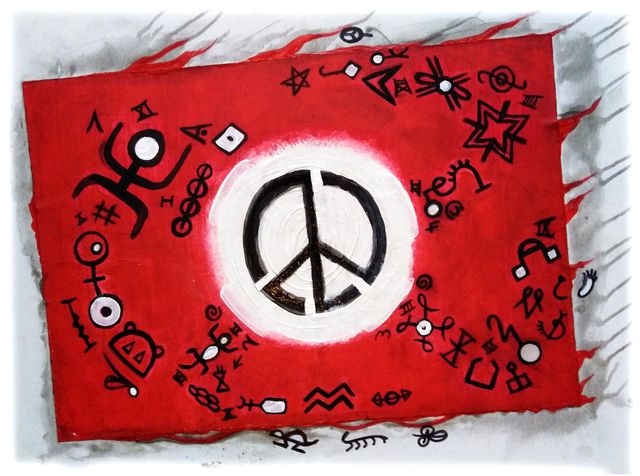
A restricted palette turned against itself — symbols Germans think they know, repainted until they ask questions back.
Open series → 5Inspired by
Studies after Heckel, Fetting, Womacka, Vogelsang and others, redrawn in Varga's own hand.
Open series → 1Science Fiction
Crystalline cities, comets and spiral galaxies in neon and metallic acrylic.
Open series → 2Comic
Pin-ups from the Labrats comic universe — drawn, painted, bound by hand.
Open series → 5Archive
Uncatalogued and in-progress works photographed in the studio.
Open series →Five themes
Five threads that run through the archive.
Race & Identity
The complexities of Black identity in Germany — challenging stereotypes, celebrating heritage.
Queerness & Visibility
Acceptance and visibility, within his community and beyond.
Marginality & Resistance
Voices from the fringes — exclusion transformed into empowerment.
Intercultural Dialogue
Spaces for difficult conversations, bridged by shared human experience.
Historical Memory
Reclaiming suppressed histories of migration and the post-colonial.
How much is it worth?
Nothing here is for sale — the people who visit decide. Each number is the live median of what visitors would pay, so one joke figure can't skew it.
No estimates yet — be the first. Open any work in the archive and say what it would be worth to you.
The artist
Stev Varga (b. 25 June 1978, Altdöbern) is a self-taught artist based in Cottbus, Germany. Trained as a bookbinder in individual and special production, he builds his paintings the way he binds books — layer over layer, stitched, glued, fixed — on canvas, paper, hemp and salvaged wood.
He has spent two decades passing the craft on: leading the Comic & Drawing group at the Sachsendorfer Oberschule twice a week since 2008, coaching at the Kunstfabrik in Spremberg, and since 2016 running a weekly open workshop at the Humi Youth Club.
His work questions how people read symbols — a peace sign Germans misread at first glance, a national flag repainted until it argues with itself — and how a post-socialist city looks at the strangers it lives with. Varga himself keeps close to the city's newcomers — friends from Nigeria, Ghana, Egypt, India and Pakistan among them — the neighbours his paintings insist on looking straight at.
Acrylic · Coffee · Graphite · Cotton · Polyester · Carton · Glass · Metal · Found wood
Xenoase · Bamum Signs · Burned
An artistic tribute to African immigrants in Cottbus
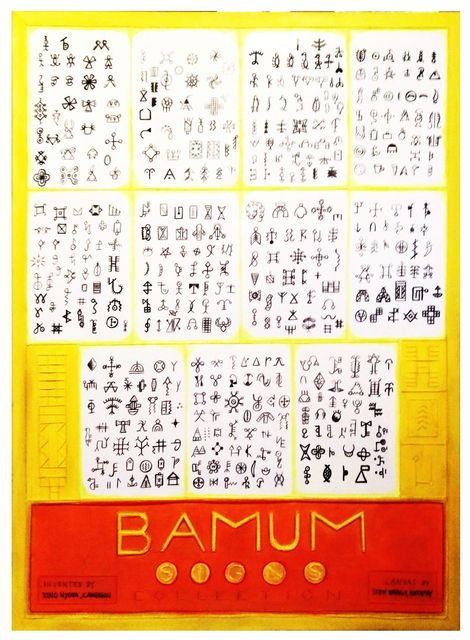
The largest body of Varga's archive — the Xenoase series — honours African lives in Lusatia: portraits in graphite and coffee, Kenyan flags painted twice (once faithful, once argumentative), and canvases of hand-copied Bamum script, the alphabet invented in Cameroon under King Njoya around 1896.
The work is not decoration. BURNED writes out the names of Oury Jalloh, Christy Schwundeck and Laya Condé — people who died in German custody — over the words “and it happens again and again.”
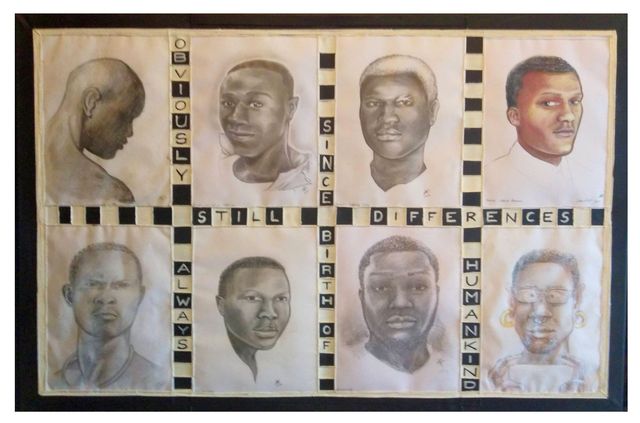
Differences sets eight graphite portraits of Black men into crossword strips reading obviously · always · still · since birth of humankind. In a city where Varga estimates too many neighbours look away, the paintings look straight back.
Documented by Shahriyar Zarei Kasiri and Shubham Dogra in “Stev Varga's Artistic Tribute to African Immigrants in Cottbus”, Introduction to Critical Intercultural Studies (World Heritage Studies), BTU Cottbus–Senftenberg, Summer 2025, Prof. Dr. Tetiana Havlin.
The studio
Varga's studio is more than a workspace — a cultural hub, a meeting point, and a safe space for people at the margins. A welcoming room whose openness stands in deliberate contrast to a city that often keeps its doors shut.
Painting happens between conversations; art and social commentary merge on the same tables. The studio can be visited by appointment — see below.
Visits & enquiries
The studio archive can be visited by appointment. For works, commissions, workshops or exhibitions, get in touch.